

Georgetown SFS-Q Students Practice Diplomacy in International Negotiation
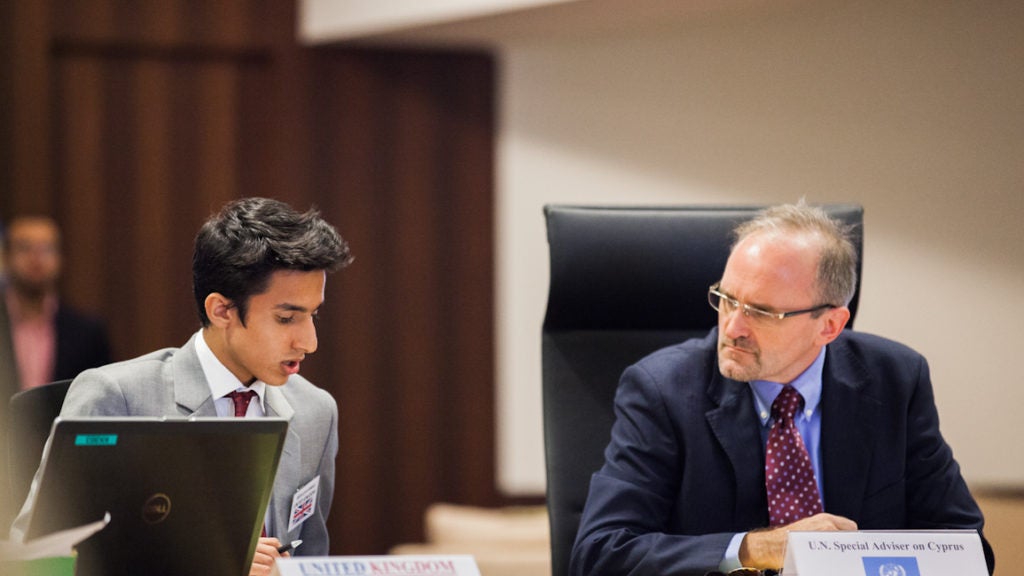
Georgetown University School of Foreign Service in Qatar (SFS-Q) partnered with the Institute for the Study of Diplomacy to conduct an International Negotiation and Crisis Simulation exercise, putting SFS-Q students through complex negotiations and real time crisis decision-making activities on Friday 9th and Saturday 10th November, at SFS-Q campus.
More than 30 SFS-Q students dedicated their weekend to negotiating the scenario ‘Can A Cyprus Settlement Be Reached in 2014?’; looking at the particular situation of Cyprus since being divided following Turkish invasion in 1974. The simulation was designed to both compliment the students’ studies and also better prepare them for their future careers through invaluable hands on experience.
The exercise involved assigning students to different teams, with the chief actors in the negotiations being the Greek Cypriots, Turkish Cypriots, Greece, Turkey, United Kingdom, European Union, and the United States In their respective teams. they were then tasked with attempting to achieve a diplomatic settlement to reunify Cyprus and resolve this frozen conflict.
James MacGregor, Assistant Dean for Academic Services, SFS-Q commented, “The purpose of this activity is not so much about finding a solution but rather to give students first-hand experience of the negotiation process, in order to demonstrate how different and challenging these types of negotiation situations are in real life. Due to the diverse student body at SFS-Q it’s hard to select a case that doesn’t pose some sort of relevance and connection with the majority of those participating; this has led to stimulating and animated discussions over the two days. ”
To conclude the exercise students gathered around a large round table in their team groups and tried to thrash out a solution, learning the obstacles to co-operating, practicing diplomacy, making concessions and trying to gain bargaining power.
Talal Al Namma, SFS-Q student commented on what he took from the experience, “It’s been really stimulating and a lot harder than I expected it to be. I was surprised at how emotional the negotiation process became for us all and learning how to put those feelings aside and try and concentrate of reaching a diplomatic solution through understanding the different perspectives and challenges each side came to the table with was very rewarding.”
Sabah Khadri, SFS-Q student also commented, “I did a similar exercise last year and can say that it keeps getting better. I was representing Turkey in the simulation and what I found most challenging was trying to get the other sides to understand that we must find a solution that is in the best interest not just for the country’s issues – in this case Cyprus – but also for larger World issues as well. Overall it’s been a highly engaging and thought provoking experience.”
Jim Seevers, Institute of the Study of Diplomacy at Georgetown, Washington, moderated the negotiations concluded, “The students were asked to absorb an enormous amount of material during this simulation of the Cyprus situation and did a great job. They’ve shown a lot of energy and commitment and learned a great deal about international negotiation in the process, as well as the real world issues that affect Cyprus.”